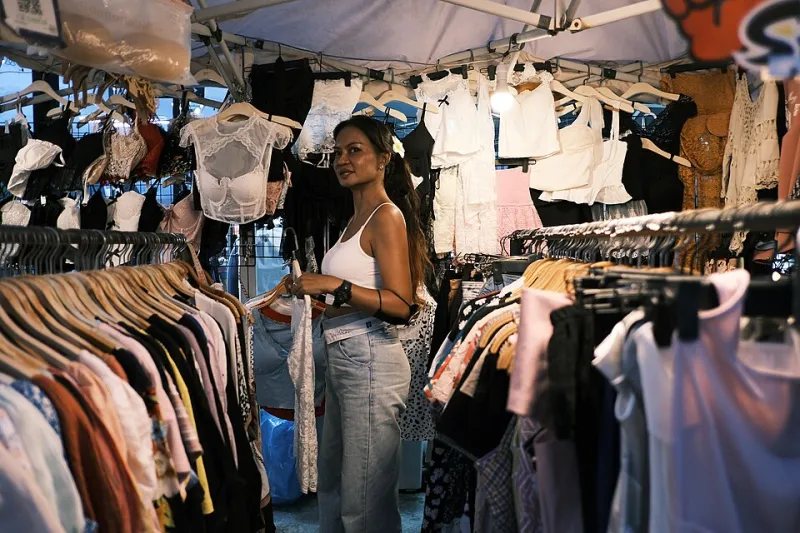
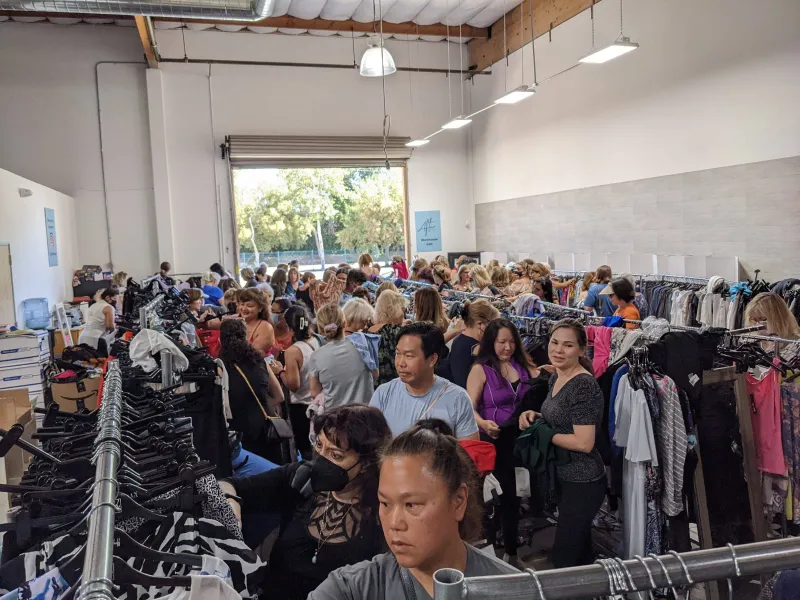
Between the Nail Salon and the Grocery Anchor: America's Strip Malls Are the New Fashion Districts
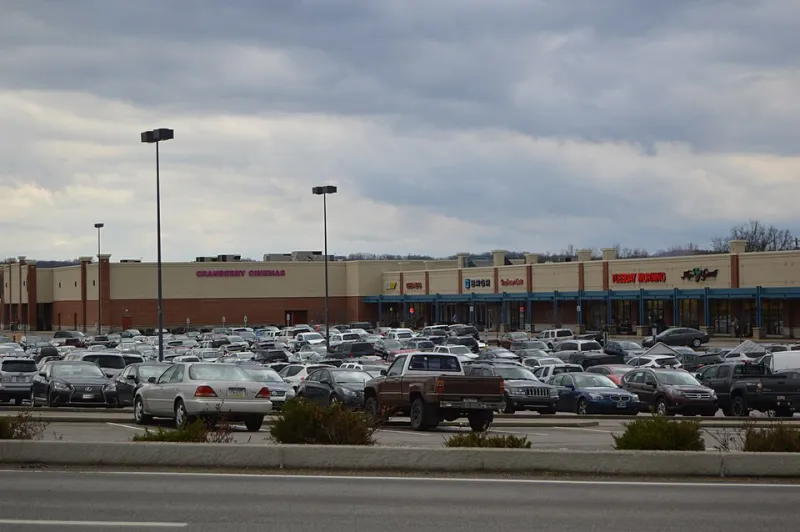
Photo: Nyttend, Public domain, via Wikimedia Commons
There's a specific kind of magic happening in a parking lot outside a Joann Fabrics at 4 p.m. on a Tuesday. A woman walks out of a storefront wedged between a pho restaurant and a tax preparer, carrying a garment bag. Inside that storefront: a tailor who has reworked half the neighborhood's vintage denim, a rack of hand-picked resale, and a regular who's been coming since the shop was a phone repair kiosk.
Nobody's posting about it. Everybody should be.
We've spent the last decade mourning the death of retail — the mall implosions, the flagship closures, the empty department store shells that look like set pieces from a dystopian film. But while attention stayed fixed on downtown corridors and lifestyle centers with fountains, something unglamorous and quietly brilliant took root in the most maligned real estate format in America: the strip mall.
The Plaza Is Having a Moment
Here's the case for the strip mall, plainly stated. Rent is cheaper. Foot traffic is steady — not tourist traffic, not event traffic, just people picking up prescriptions and grabbing banh mi. And the shopkeepers who set up there aren't paying for a view. They're paying for a community, and they're getting one.
The result is a retail format that downtown simply can't replicate. When your landlord isn't charging you for a corner on Main Street, you can price a hand-tailored blazer alteration at something a normal human can afford. You can stock exactly what your neighbors actually wear. You can stay open on Saturdays because your customers are there on Saturdays.
It's fashion without the performance. And honestly? It might be the most honest shopping in the country.
Atlanta: The Tailor Who Owns the Plaza
Take the north Atlanta suburbs, where a Vietnamese tailor we'll call Ms. Lan (she asked us not to use the shop name — she doesn't need the crowds) has operated out of a Duluth plaza for nineteen years. Her neighbors: a bubble tea shop, a dollar store, and a mattress outlet.
Her client book reads like a zip code census. She takes in suits for church, rebuilds wedding dresses from mothers' trunks, and — this is the part that matters — reconstructs thrifted blazers for a generation of customers who discovered that a $14 Goodwill find plus $30 of tailoring beats anything at the mall.
"They bring me Pinterest pictures now," she told us, laughing. "Before, they brought me their mother's clothes. Same work."
That's the strip mall advantage in a sentence: the same craft, priced for real life, in a place you already go.
Phoenix: Sneaker Culture in a Former Pet Store
Drive west and the story repeats with different merchandise. In a Mesa, Arizona plaza anchored by a Bashas', a sneaker resale shop operates out of what was, until 2019, a pet grooming business. The owner, a former warehouse worker, built his inventory through trading — the sneakerhead version of a barter economy — and now moves heat like Jordan 4s and New Balance collabs out of a space with fluorescent lighting and a hand-painted sign.
There's no velvet rope. No appointment. Just a guy who knows exactly which pairs will move in Arizona heat (breathable mesh, apparently, is non-negotiable) and a customer base of high schoolers, dads, and one retired mailman who comes in weekly for what he calls "the good socks."
Compare that to the flagship sneaker boutiques downtown, where the vibe is closer to an airport lounge than a shoe store. The plaza version is better. It's just better.
New Jersey: The Resale Rack That Out-Performing the Mall
And in a Montclair-adjacent New Jersey strip — anchored, inevitably, by a grocery store — a curated resale shop has become the plaza's de facto social club. The owner stocks a tight edit: vintage Levi's, cashmere by the shelf, and a wall of belts that regulars describe as "dangerous."
What makes it work isn't just the pricing, though the pricing is genuinely absurd in the customer's favor. It's the curation loop. She buys from her own neighborhood, sells back to her own neighborhood, and the inventory becomes a running portrait of the town itself. The mall can't do that. The internet can't do that.
How to Shop a Strip Mall Like You Mean It
A few ground rules from our reporting:
- Follow the anchor. Plazas with a busy grocery store have built-in foot traffic, which keeps good shops alive.
- The tailor is the treasure. Every great plaza has one. Find yours and never buy anything that fits "close enough" again.
- Go on Saturdays. That's when the regulars are there, and regulars are how you learn what's actually good.
- Ask what they can't keep in stock. It's the fastest way to understand a shop's real identity — and it tells the owner you're paying attention.
The Honest Fashion District
There's a temptation to frame all of this as a scrappy underdog story — plucky little shops versus the corporate giants. But that undersells it. The strip mall isn't the consolation prize of American retail. In a lot of ways, it's the main event: accessible prices, real expertise, owners who know your name and your inseam.
Downtown retail is where fashion goes to perform. The strip mall is where it goes to live. And if the parking lot outside your local plaza has been looking a little more stylish lately — a few more garment bags, a line out the tailor's door — now you know why.
Go find your plaza. The rack is waiting.