One Outfit, Zero Regrets: The Quiet Power of the Personal Uniform
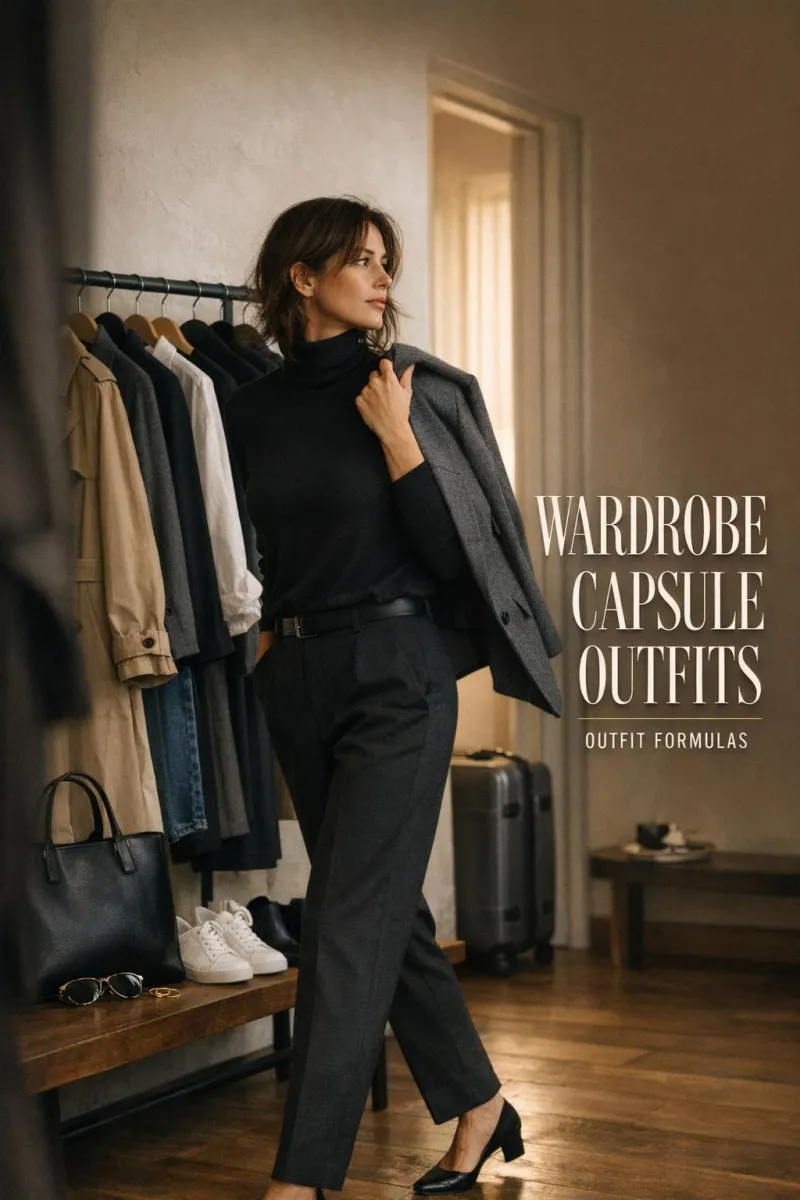
Photo: minimalist capsule wardrobe neutral clothing on rack woman getting dressed morning, via uniqistic.com
There's a moment that happens in closets across America every morning at 7:15 a.m. You stand there, robe on, coffee in hand, staring at a rack of clothes and feeling oddly defeated. You own plenty. You're wearing nothing.
Now consider the woman in Chicago who has worn black slim trousers, a white tee, and a cropped wool coat nearly every day for six years. Or the Savannah grandfather whose Sunday-through-Saturday rotation hasn't wavered since the Reagan administration: seersucker in summer, twill in winter, pressed to a knife's edge. These people are not boring. They are, by most accounts, the best-dressed people their friends know.
Welcome to the uniform theory — the idea that a signature look, worn with intention, beats a closet full of almosts.
The Original American Style Hack
The uniform isn't a Silicon Valley invention, no matter what the hoodie discourse tells you. Long before tech founders made the gray tee a personality trait, Southern grandmothers were loyal to a house dress, ranchers to denim and pearl-snap shirts, and Midwestern dads to the eternal combo of khakis and a quarter-zip. The impulse is the same: find what works on your body, in your climate, in your life — then stop renegotiating with yourself every morning.
What's changed is who's adopting it. Ask around and you'll find attorneys in Dallas who've narrowed their workweek wardrobe to three rotations, teachers in Portland with a capsule of wide-leg denim and chunky knits, and a whole generation of 20-somethings curating a look so consistent their friends can spot them across a crowded bar.
The Psychology: Decision Fatigue Is Real
Researchers have long noted that willpower is a finite resource, and every small choice — including what to wear — draws from the same tank. By the time you've settled on an outfit, you've spent a little of the focus you'll need for the meeting, the pitch, the parent-teacher conference.
A uniform removes that tax entirely. But the benefits go beyond efficiency. There's a confidence that comes from knowing your clothes work. When you're not auditioning a new outfit every day, you stop fidgeting with hemlines and start paying attention to the room. The uniform doesn't shrink your presence; it sharpens it.
Uniform vs. Rut: The Difference Is Intentional
Let's be clear about what a uniform is not. It's not wearing the same stained hoodie until it fuses with your body. A true uniform has standards: fit, fabric, and upkeep. The Chicago woman in the black trousers? She buys multiples of the same pair and replaces them the moment they lose their shape. That's not a rut — that's a system.
The distinction comes down to three things:
- Fit. A uniform only works if the fit is excellent. This is where a good tailor earns their fee.
- Quality. You'll wear these pieces constantly, so fabric that pills after three washes is a nonstarter.
- Variation within the formula. The silhouette stays; the styling shifts. Swap the tee for a blouse, the loafers for boots, add a scarf or a statement earring. Think of it as a chord progression — same key, endless songs.
Building Your Own: The Three-Question Framework
Ready to draft your uniform? Start with three questions.
1. When do I feel most like myself? Think of a specific outfit you've worn that generated compliments, or a photo where you look effortlessly put-together. Not the trendiest look — the truest one. That's your seed.
2. What does my actual life demand? A uniform for a remote designer in Los Angeles looks different from one for a nurse in Minneapolis. Be honest about your climate, your dress code, and how much you sit, stand, and sprint.
3. Can I name it in one sentence? The best uniforms are describable: "dark denim, white shirt, blazer, loafers" or "midi dress, sneakers, denim jacket." If you can't summarize it, you don't have a uniform yet — you have a vibe.
Once you've answered, build the kit: two to three bottoms, four to six tops that all work with every bottom, one to three layers, and shoes that anchor it all. Neutral-leaning palettes make everything interchangeable, but a signature accent color — a green scarf, red socks, whatever — keeps it from feeling like a membership perk at a telecom company.
The Seasonal Upgrade
The uniform's quiet genius is that it seasons beautifully. Your summer formula in linen becomes your fall formula in flannel. Same silhouette, new texture. Shoppers who've committed to a uniform report spending less overall — no more panic-buys before an event — but spending better, because every purchase has to justify its place in a working system.
Wear It Like You Mean It
There's a reason the most stylish people you know seem to repeat themselves. Repetition is how a look becomes a signature, and a signature is how style stops being a daily negotiation and starts being a fact. The uniform isn't a surrender of creativity. It's a decision made once, well — so you can spend the rest of your morning, and your willpower, on things that matter more.
Pick your formula. Buy it twice. And enjoy never standing in front of the closet at 7:15 again.