Inside the Sample Sale Circuit: What Fashion Insiders Know That You Don't
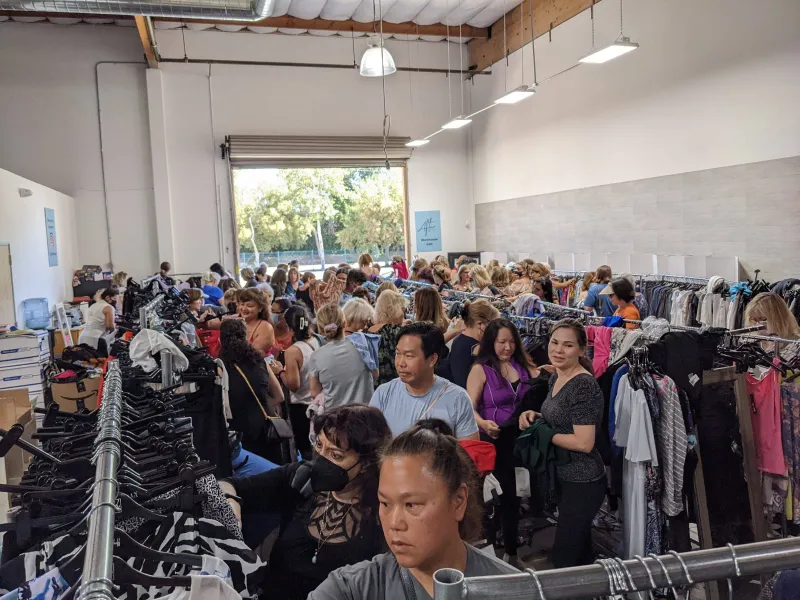
Photo: crowded designer sample sale warehouse racks shoppers, via i.shgcdn.com
There's a moment at every good sample sale — usually around 11 a.m. on day one — when the energy shifts. The early birds have already claimed the good racks, the browsers are still circling, and the people who actually know what they're doing are quietly working the back tables. That back table, friends, is where the real sale lives.
We've spent the last few seasons embedded in the American sample sale circuit, from New York warehouse scrums to Denver pop-ups that feel more like tailgates. What we learned: the difference between walking out with a $1,200 coat for $240 and walking out with a regrettable tote bag is almost entirely strategy. So here it is — the playbook, no gatekeeping.
Timing Is the Whole Game
The folklore says go early. The truth is more complicated.
Day one, first hour gets you the deepest selection but the thinnest discounts — some houses hold their best markdowns for later days to keep traffic moving. Day two or three is where discounts deepen (often 20–30% more than opening day), but the size run has been picked over like a clearance bin at a suburban mall.
The genuinely savvy move? Ask a staffer when restocks happen. Many sales replenish racks from overflow boxes throughout the day. Showing up at a restock window on day two is the closest thing to a cheat code this economy offers.
And for online flash sales — the kind that run 48 hours or less — set a calendar alarm, not just an email reminder. Inventory on these is often genuinely tiny, sometimes fewer than 50 units per style. By the time the "last chance" email lands, the sale is fiction.
Learn to Read the Label
Here's what nobody prints on the flyer: not every "sample" is a sample.
A true showroom sample is a one-off made to show buyers — often cut slightly differently, sometimes in a size 4 or 6 only, occasionally with interior finishing that differs from production. These are collector's items, and honestly, usually the best-made things in the room.
But sales also move factory seconds — pieces with flaws that kept them out of retail. Sometimes it's a crooked seam or a pull in the knit. Sometimes it's a missing interior pocket or a hem that was re-done twice. None of this is necessarily a dealbreaker at 70% off, but you deserve to know what you're buying.
The inspection routine the pros use takes about 90 seconds:
- Check the care tag. A paper or string tag suggests a true sample; a standard woven production tag suggests run-off inventory.
- Hold the garment up to the light and scan for puckering, shade variation across panels, and uneven hems.
- Test every zipper twice. Every one.
- Look at the inside. Sample construction can be raw or hand-finished — charming, if you know it's there.
If a "sample" has a full production size run and zero flaws, you're not shopping a sample. You're shopping excess inventory at a discount. Which is fine! Just price it accordingly in your head.
The State-by-State Circuit
New York still runs the show — the fall and spring sample sale clusters around the Garment District and Chelsea are the densest in the country, with multi-brand events packing dozens of houses under one roof. If you can only do one sale a year, make it a multi-brand warehouse event; the variety-to-effort ratio is unbeatable.
Los Angeles trades on its manufacturing base. Sales around downtown's fashion district often include current-season production overruns, and the vibe is markedly calmer than Manhattan — more sorting, less combat.
Chicago's scene clusters around the West Loop and the Merchandise Mart, with design houses and a strong denim presence. Minneapolis punches way up for a city its size, thanks to a legacy of apparel manufacturing — the winter coat sales alone justify the cold.
Dallas and Nashville are the sleeper picks. Both have grown serious showroom scenes, and the southern sales tend to be less crowded, which means staff actually have time to answer questions. In Nashville especially, the western-wear adjacent brands put on sales where the boots section alone is worth the trip.
And don't sleep on regional consignment mega-events. They're not sample sales in the strict sense, but the discount math can be comparable with far less chaos.
Etiquette, or How Not to Be That Person
Sample sale culture has rules, mostly unwritten:
No holding entire racks. Draping three jackets over your arm while you deliberate is fine. Building a fortress around a table is not.
Cash speeds everything up, even where cards are accepted. Lines at these things are long enough already.
Ask before you un-hang. In dense sales, garments are often grouped by size deliberately. Pulling things apart to browse saves you seconds and costs everyone else minutes.
Be kind to the staff. They know where the restock boxes are. They know what's coming out on the final markdown day. rudeness buys you nothing; decency occasionally buys you a heads-up.
What's Actually Worth Buying
Not everything at 70% off is a bargain. The pros prioritize: outerwear (the highest cost-per-wear category in American closets), tailored pieces that can be altered cheaply, leather goods, and anything from a house whose retail pricing you've verified beforehand — because "70% off" means nothing if the original price was aspirational fiction.
Skip the impulse zone near the register. That's not a coincidence; it's merchandising.
The sample sale circuit is one of the last genuinely fun corners of American shopping — a little chaotic, a little sweaty, occasionally transcendent. Show up with a list, a tape measure, and a 90-second inspection habit, and you'll never pay full freight for a winter coat again.