The 'Optional' Is Doing a Lot of Work: How to Read a Black Tie Invitation Without Spiraling
Photo: (U.S. Marine Corps photo by Lance Cpl. Kayla V. McTaw/Released), Public domain, via Wikimedia Commons
The invitation lands in your inbox with a tasteful little crest and four words that have ruined more evenings than a bridge closure: Black Tie Optional.
It reads as a courtesy. In practice, it's a host hedging. Black tie optional — sometimes abbreviated BTO by people who plan weddings for a living — is the dress code equivalent of 'come as you are, but we both know what we mean.' It exists because the host wants a room that looks like an event without making half the guest list feel like they need to rent a tuxedo on a Tuesday.
So what do you actually wear? Here's the field guide we wish came stapled to the envelope.
What the phrase is really doing
Traditionally, black tie means a tuxedo for men and a long gown or formal cocktail dress for women. 'Optional' means the host has decided not to enforce the top of that scale. It does not mean anything goes, and it absolutely does not mean the jeans you wore to the airport are invited.
The phrase survives because it solves a real social problem. Weddings, galas, museum benefits, and company holiday parties all want atmosphere, but they also want attendance. BTO lets a host say 'we'd love you in a tux' while quietly accepting that your cousin will show up in a navy suit and nobody gets escorted out.
Your job is to land in the top half of the room, not the bottom third.
The three-question decision tree
Before you open a single closet door, answer these.
1. Where is it? A hotel ballroom, a museum atrium, a country club, or a restored theater all carry formal gravity. A rooftop, a brewery, a barn with string lights, or a friend's backyard do not, no matter what the invitation says. Venue beats wording every time.
2. When is it? Evenings after six lean formal. A daytime BTO — a luncheon, a brunch wedding — gives you permission to lighten up: a dark suit, a knee-length dress, no satin.
3. Who else is going? This is the honest one. If the guest list is your partner's law firm, dress for the managing partner. If it's a mixed crowd of college friends and family, aim for the middle and add one sharp detail.
If you own a tuxedo
Wear it. Full stop. A tuxedo at a black tie optional event is never wrong; it's only occasionally overdressed, and overdressed reads as 'took it seriously,' which is a compliment. Skip the experimental wide lapel if it's a family wedding and go with the shawl or peak lapel you already had tailored. Black bow tie, black shoes, done.
If you're in suit-and-dress territory
Men: a dark suit — charcoal, navy, midnight — with a white or pale blue shirt, a silk tie in a restrained color, and polished leather shoes. Add a pocket square if you're feeling generous with yourself. No tie? Fine, as long as the shirt has structure and the jacket actually fits.
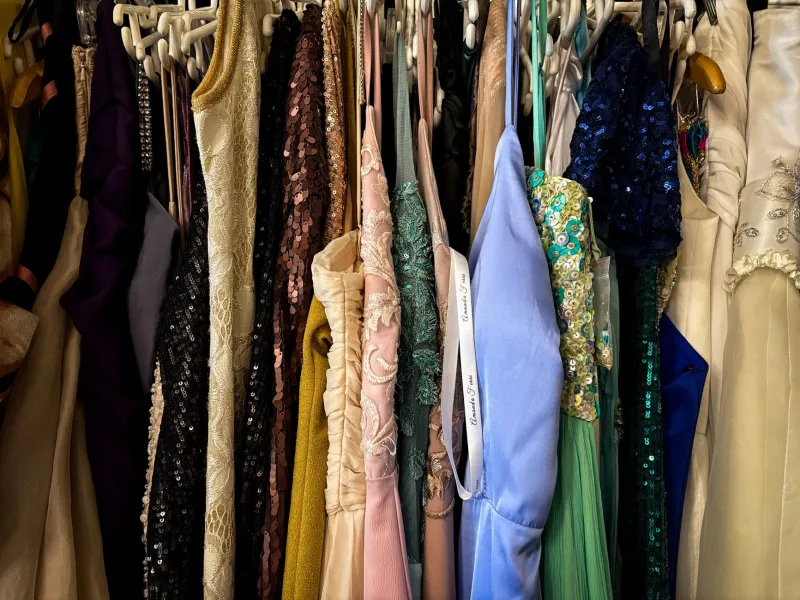
Women: a midi or floor-length dress in a substantial fabric, or a tailored suit if that's more you. Cocktail length works; a mini does not. A silk column, a velvet slip dress under a jacket, or wide-leg trousers with a fitted top all read correctly. When in doubt, go darker and simpler than you think you need to.
If your closet stops at 'nice jeans'
You have options that don't involve a rental fee. Start with the darkest jeans you own — no distressing, no fading — and pair them with a blazer, a crisp shirt, and leather shoes or a clean ankle boot. It's not black tie. It's also not going to get you side-eye at the bar.
Better still: borrow. A friend's jacket, a sibling's dress, a thrifted tux jacket that fits your shoulders. A good tailor is cheaper than a rental, and a forty-dollar alteration on a fifteen-dollar jacket has saved more party seasons than any app.
The four mistakes people actually make
- Reading 'optional' as 'casual.' It isn't. It's 'formal, with mercy.'
- Wearing something you can't sit down in. Galas involve chairs, cars, and stairs.
- Testing new shoes at a formal event. Bring the flats. Nobody has ever regretted the flats.
- Outdressing the host. If the host is in a suit, skip the full tux with the velvet slippers. Match the room's ceiling, not its floor.
The bottom line
Black tie optional is a trap only if you treat it as a riddle. Treat it as an instruction to look like you made an effort, and you'll be right nearly every time. Aim for the middle of the room, add one thing that's unmistakably yours, and remember that the person who looks comfortable always looks better dressed than the person who looks correct.