Beige Fatigue Is Real: The Case for Dressing Like Nobody Approved It

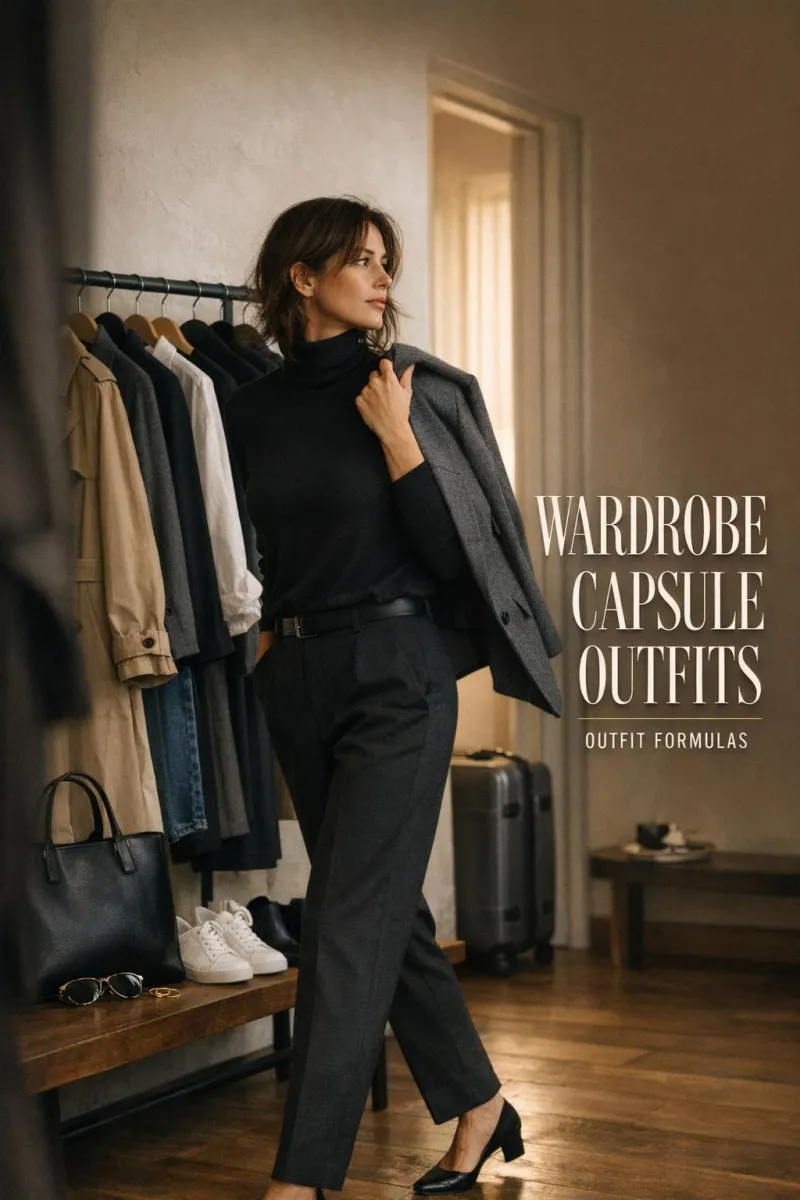
Walk into any mid-priced department store from Seattle to Atlanta and you'll see it: the same rack, rendered in the same palette, over and over. Sand, stone, fog, oat. Cargo khakis cut to flatter no one and offend no one. An oxford shirt so anonymous it could be evidence in a witness protection trial. A blazer with no lapel statement, no shoulder, no point of view.
We did this to ourselves, by the way. Nobody held a gun to our heads and demanded we dress like a tasteful fog bank.
How the Beige takeover happened
The story starts around 2020, when the phrase "quiet luxury" escaped the finance blogs and colonized the mainstream. Suddenly the aspirational American wardrobe was a Loro Piana-adjacent fantasy — cashmere you couldn't clock from ten feet, a tote with no logo, the whole "if you know, you know" routine. Then the dupes arrived. Fast fashion did what fast fashion does, and within eighteen months the look was everywhere at every price point, which is another way of saying it meant nothing at any price point.
Add the pandemic-era basics boom — everybody needed elastic waistbands and neutral tones that photographed fine on Zoom — and you get the current situation: an entire country dressed like the lobby of a boutique hotel.
"I kept buying pieces that were supposed to be timeless," says Marisol Vega, 34, a graphic designer in Chicago who describes her former wardrobe as "expensive oatmeal." "Then I looked at my closet one morning and realized I could get dressed in the dark and still look like everyone at the airport."
Vega isn't alone. There's a reason thrift stores are mobbed and vintage sellers on Depop can't keep 1980s silk blouses in stock. When everyone owns the same neutral uniform, the only scarce resource left is personality.
The backlash has a uniform too (it's just louder)
Spend five minutes on American style TikTok and you'll find the counter-movement in full swing: maximalist layering, clashing prints worn with total confidence, color palettes that would get you gently escorted out of a Silicon Valley all-hands. In Brooklyn, it's vintage western shirts under leather trenches. In Houston, it's full-throttle color blocking with turquoise the size of a doorknob. In Detroit, it's workwear reworked until it looks like nothing you could buy at a mall, because you can't.
Independent designers have noticed. Small labels across the country are building entire collections around the idea that getting dressed should be an event, not a compliance exercise. Hand-painted denim in Oakland. Rhinestone-flecked suiting in Philadelphia. A Nashville knitwear studio whose entire brand philosophy, per its founder, is "if your grandmother wouldn't be a little confused, we didn't go far enough."
This isn't just aesthetics — it's economics. When the same khakis are available at every retailer at four price points, the basics game is a race to the bottom. Loud, personal, weird clothing can't be commoditized the same way. Your hand-embroidered jacket doesn't have a dupe. Yet.
Is it political? Honestly, a little
Here's where the opinion part kicks in, because pretending this is only about fabric would be cowardly.
Generic dressing presents itself as neutral, but neutrality is a choice like any other. The great flattening of American style happened because a certain kind of restraint — expensive-looking, status-coded, quietly conformist — got framed as the sophisticated default. Everything else got coded as try-hard, unserious, nouveau. That's not an accident. That's a value system wearing a fisherman sweater.
So when a 26-year-old in Columbus walks into a job interview in a burnt-orange suit with wide lapels and vintage boots, that's a style decision, sure. It's also a quiet refusal to accept that blending in is the price of being taken seriously.
We're not saying burn your oxfords. The white shirt is a classic for a reason, and there's real pleasure in a well-cut pair of chinos. The problem isn't the clothes — it's the reflex. It's buying beige because you were scared of the color, wearing the blazer because everyone in the meeting was wearing the blazer, mistaking invisibility for taste.
How to rebel without going broke
If your closet currently resembles a paint swatch labeled "greige," here's the Allyn Fashion starter kit for defection:
- Buy one loud thing per month. A printed shirt, a colored coat, boots that make a sound when you walk. Budget it like a utility bill.
- Thrift before you buy new. The best maximalist pieces were never mass-produced, which means the secondhand market is your only supplier. Estate sales and church rummage sales remain criminally underrated.
- Mix one classic with one chaos. The oxford shirt stays — but it goes under a sequined vest now. Structure plus surprise is the whole formula.
- Wear the thing you're saving. The statement piece you keep "for an occasion"? The occasion is Tuesday. America is aging out of waiting for permission.
The great Americana backlash isn't really about hating khakis. It's about remembering that personal style was supposed to be personal — that getting dressed is one of the few daily decisions entirely within your control, and spending it on blending in is a small, quiet tragedy.
The racks are all beige. You don't have to be.