One Pair, Every Occasion: Confessions of America's Overworked Sneakers
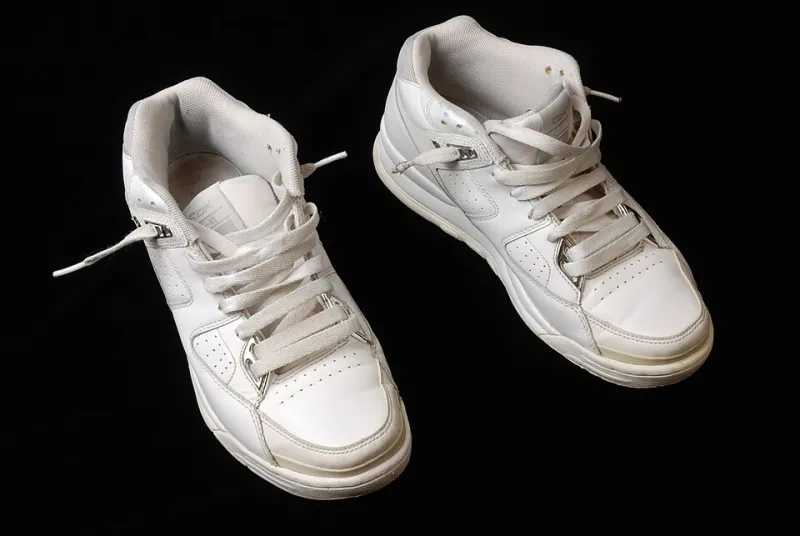
Photo: G-Unit, CC BY-SA 3.0, via Wikimedia Commons
Be honest: how many days this week did you leave the house in the same pair of sneakers?
If the answer is five, you're not lazy — you're typical. Across the country, from Austin coffee shops to Manhattan open-floor offices, one trusty pair of kicks is quietly doing shift work that used to be split between three different kinds of footwear. The white leather sneaker clocks in at 9 a.m. for the office, hits the grocery store at 6, and somehow ends up under a linen dress at dinner by 8. It never complains. It never gets a day off.
The Rise of the Do-Everything Shoe
The pandemic didn't invent comfort-first dressing, but it handed it a permanent lease. When dress codes loosened, shoes were the first domino to fall. Heels went into storage. Loafers got demoted to special occasions. And sneakers — already the most versatile thing in most closets — absorbed every remaining job.
What's changed since 2020 is the ambition of the sneaker. It's no longer just running errands; it's anchoring tailoring, evening looks, even wedding-guest outfits. Designers noticed. The runway-to-realty pipeline now regularly delivers dressy sneakers that cost as much as the suits they're replacing.
There's a real logic here. A great sneaker works with denim, trousers, shorts, and slip skirts. No other shoe category can say that. But there's a downside nobody talks about: when one shoe does everything, your outfits start to feel like the same outfit on a loop.
Stylists Say Build the Outfit Backwards
Talk to stylists and you'll hear the same advice over and over: stop treating shoes as an afterthought and start treating them as the foundation.
"Most people dress from the neck down to the ankles and then panic," one Los Angeles-based stylist told us. "I ask clients what shoes they actually wear. Then we build the wardrobe around those five pairs — not the aspirational ones collecting dust."
Her rule of thumb: a workable rotation needs one sneaker, one flat, one boot, one dressy option, and one wildcard. If your rotation is four sneakers and a pair of rain boots, you don't have a wardrobe — you have a brand loyalty problem.
There's also a financial argument. Shoes take the most physical abuse of anything you wear, and cheap ones show it fast. Five pairs that each cost $100 and get real rotation will outlast — and out-style — one $400 pair worn into the ground daily.
Five Shoes That Punch Way Above Their Price Tag
Ready to spread the workload around? These five picks earn their keep without wrecking your budget.
1. The White Leather Sneaker ($60–$120). Yes, it's the obvious one. It earns its spot by working with literally everything you own. Keep them clean — a magic eraser and a Sunday wipe-down go further than a $200 replacement.
2. The Suede Loafer ($80–$150). The fastest upgrade in footwear. Throw them on with jeans and a blazer and you look intentional instead of incidental. Bonus: they read surprisingly formal with wide-leg trousers.
3. The Chelsea Boot ($100–$200). October through April, this is the hardest-working shoe in America. Waterproof versions exist. Buy one.
4. The Canvas Sneaker ($30–$60). The great equalizer. A well-worn pair of canvas lows makes tailored clothes look relaxed and relaxed clothes look considered. Cheap enough to own in two colors.
5. The Dressy Flat or Minimal Sandal ($70–$140). The escape hatch. For dinners, weddings-adjacent events, and every moment a sneaker can't quite carry, this is the pair that saves the outfit.
The Case for Letting Your Sneakers Retire (Partially)
Nobody's saying abandon the do-everything shoe. It's a miracle of modern dressing and probably the single best wardrobe purchase most Americans make. But a rotation exists for a reason: shoes last longer, outfits get more interesting, and — maybe most importantly — getting dressed stops feeling like autopilot.
Your sneakers have carried you far. Give them a day off. They've earned it.